The Unscripted Ask: Preparing for 90-Second Angel Conversations at 2026 Events

At US angel gatherings, the formal pitch is only one part of the day. The moments between sessions, near the coffee line, and on the way to the exit can be just as consequential. For founders, these brief encounters are valuable, but they are not miniature pitch meetings. They reward preparation, brevity, and respect for the investor’s time. This guide outlines how to make a 90-second angel conversation useful without turning it into a trapped exchange.
The Break Is Not a Second Stage
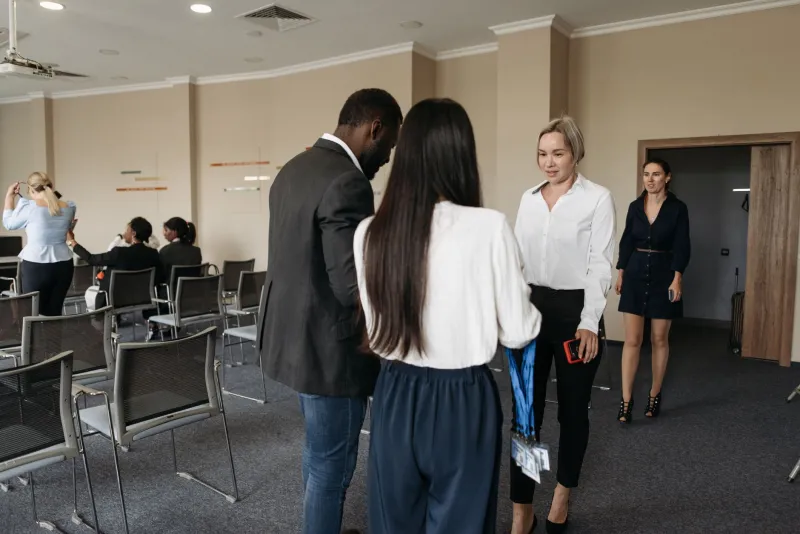
Event breaks are transit zones. Investors are moving between rooms, checking messages, finding colleagues, or preparing for the next panel. A 90-second ask should not attempt the full narrative of a fundraising presentation. Its job is narrower: create a clear next step. Founders who treat a hallway conversation as a compressed pitch may win a few seconds of attention but lose goodwill when the investor cannot exit gracefully.
The better approach is to think of the encounter as a routing decision. The founder is asking the investor to choose one of three outcomes: receive a short memo, take an introduction, or decline politely. Each outcome is acceptable because each one preserves the relationship and protects the investor’s schedule.
Build the Ask Before the Event
A compact ask is written, not improvised. Before arriving at the venue, founders should draft one sentence for each of three elements: what the company does, what evidence makes it credible today, and what specific next step is being requested. The draft should avoid internal jargon and avoid adjectives that cannot be supported by evidence.
Rehearse the ask aloud with a timer. A useful structure is 25 seconds for the company, 25 seconds for one proof point, and 25 seconds for the request. The remaining time is for questions and a clean exit. Founders should also prepare a 45-second version for the investor who is already moving toward the door. The shorter version may include only the company and the request, with the evidence reserved for the follow-up.
Do not ask for a check in a hallway. A 90-second conversation is not the place to request a wire, a commitment, or a term sheet conversation. The appropriate requests are modest: permission to send a one-page memo, a calendar link for a short call, or a suggestion about which member of an angel group should receive the materials. At AngelWeek, the event floor is a place to begin a process, not to finish one.
Read the Room and the Body
Investors send signals before they speak. A founder should notice whether the investor stops walking, turns a shoulder toward the conversation, asks a follow-up question, repeats a phrase from the pitch, or puts down a phone. These are signs that the conversation has room to continue for another minute. They are not guarantees of interest, but they justify a slightly longer version of the ask.
Exit signals are equally clear. The investor may glance toward the door, say good luck while stepping back, keep a hand on a bag, or begin scanning the room. When an exit signal appears, the founder should close the conversation rather than add another question. A useful closing line is simple: I will send the one-pager; if it is useful, I will follow up next week. That sentence gives the investor a clear end point and a low-pressure reason to reply.
Respect is memorable. Founders who release an investor at the first sign of disengagement are more likely to be received well at the next event. Founders who continue talking after the signal has been sent may be remembered for the wrong reason.
Hand Off One Artifact, Not a Folder
A brief encounter should produce one artifact, not a packet. The best choice depends on the investor and the setting. A one-page traction memo is often sufficient. A QR code linking to a 90-second product demonstration can work well in a crowded room. A printed card with a memo link is useful when the investor prefers paper. A full deck is usually too much for a hallway exchange.
At US events with badge scanning or event apps, founders should use the official tool when it is available, but they should also carry a backup. Ask permission before scanning a badge or adding an investor to a list. If the investor offers a business card, note the context of the conversation on the back: the event, the investor’s stated interest, and the promised follow-up. That small note makes the later email more credible.
Avoid handing over heavy materials that will be discarded before the next session. The artifact should be light enough to carry and specific enough to prompt a reply. One useful document is better than five unread ones.
Follow Up Without Creating a Trap
Send the follow-up within 24 hours. The subject line should reference the event and the conversation so the investor can place the encounter. Keep the message short: a thank-you, a restatement of the request, and one attachment or link. Include a clear out. A sentence such as If this is not a fit, no reply is needed reduces the sense of obligation and often increases the chance of a response.
If there is no reply after one week, one gentle nudge is reasonable. After that, stop. A brief hallway exchange is not a relationship, and a follow-up should earn the next conversation rather than demand it. Founders who respect the boundary are more likely to be invited back into a longer discussion when the timing improves.
Practice, Measure, and Adjust
Founders should rehearse the ask with someone who will interrupt them. The goal is not perfect delivery but recovery from interruption. Practice ending early. Practice answering one question and then returning to the request. After the event, track a few simple measures: how many brief conversations took place, how many artifacts were requested, and how many replies arrived. Review which opening sentence led to a follow-up question and which closing line ended the conversation cleanly.
A 90-second angel encounter is not a substitute for a formal pitch or a diligence process. It is a routing tool. The founder’s task is to make the next step easy, the evidence easy to review, and the exit easy to take. In a crowded US angel event, that combination is often more valuable than a longer pitch delivered to an investor who is already looking for the door.