Table Stakes: Working the Room After a 2026 Angel Pitch Event
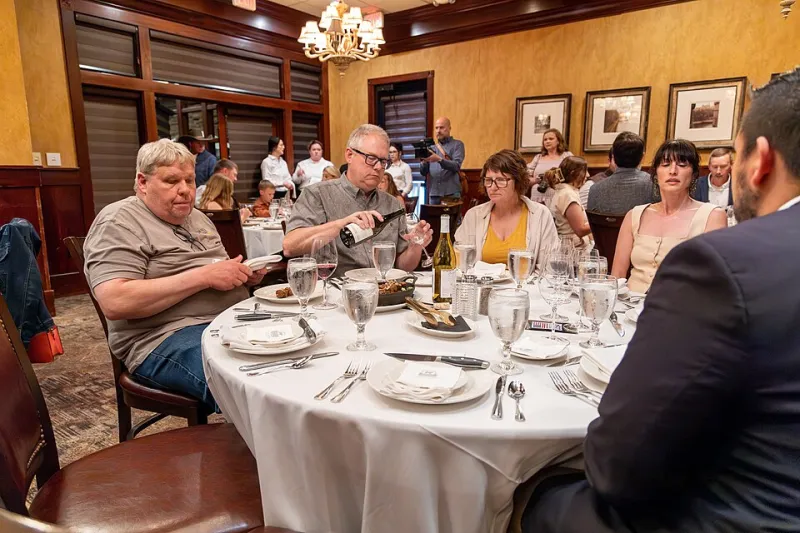
Photo: USDAgov, Public domain, via Wikimedia Commons
A founder spends weeks preparing for the stage: the twelve-minute presentation, the three-slide appendix, the answer to the question about churn. Then the lights come up, the room shifts toward the buffet, and the real conversation begins. At 2026 angel pitch events across the United States, the off-stage hour frequently carries more decision weight than the pitch itself—not because the pitch is unimportant, but because the meal is where investors test the parts of a company that a deck cannot show.
The Stage Ends; the Signal Begins
The formal presentation is a controlled environment. The founder selects the narrative, times the pauses, and knows which objection is likely to arrive from the left side of the room. The dinner afterward is uncontrolled. Angel investors use that looseness deliberately. They watch how a founder handles an unexpected question from a limited partner's spouse, how they respond to a competing founder at the same table, and whether they listen as carefully as they present.
For founders, the practical shift is to stop treating the meal as an extension of the pitch. It is not a second performance. It is evidence-gathering—for both sides. The founder is learning which investors ask operating questions rather than valuation questions, which ones arrive with a thesis already formed, and which ones are merely filling a seat at a sponsored event.
Seating Is a Map of Intent
At many US angel gatherings, seating is assigned or semi-assigned. Founders should read the arrangement before they read the room. A table that mixes one angel group's screening committee with two unaffiliated investors and a founder from a portfolio company is a different signal than a table of sponsors and event staff. The former suggests the organizers want a working conversation; the latter suggests the evening is ceremonial.
Seating also reveals who is being courted. If the same investor is placed beside three different founders across the evening, that investor is likely a priority for the organizers—and possibly a check-writer with capacity. If a founder is seated away from the investors who asked the sharpest questions during the Q&A, the meal may be a courtesy rather than a continuation of diligence.
Founders should not overread a seating chart. They should, however, note who chose to sit where once the formal seating dissolves. Investors who migrate toward a particular founder after dinner are sending a clearer signal than any business card exchanged at the registration desk.
Table Talk That Functions as Diligence
The most useful off-stage conversations are not the ones about valuation. They are the ones about sequence. An angel asking, "What has to be true in the next ninety days for this round to close?" is running a diligence thread in plain clothes. A founder who answers with a specific milestone and a named customer is giving the investor something to verify. A founder who answers with a market-size figure is giving the investor a reason to wait.
Other table questions worth treating as diligence: Who is the first reference you would want us to call? What did your last investor misunderstand about the business? Which part of the pitch did you cut, and why? These are not traps. They are attempts to see how a founder thinks when the slides are gone.
Founders should also listen for what investors say to each other. When one angel turns to another and says, "This is the one I mentioned," the founder has just learned that a prior conversation exists. That is useful—not necessarily flattering, but useful. It indicates the investor has already spent reputational capital before the meal began.
Who Not to Corner
The dinner is a room with a hierarchy, and founders who ignore it pay a social price. The most common mistake is cornering the most prominent investor at the table for a fifteen-minute conversation while other guests wait. Prominence at an angel event is not always the same as capacity to write a check. A well-known angel may be a connector rather than a lead. A quieter attendee may be the managing director of the group's fund.
Founders should also avoid cornering the event organizer. Organizers are working. They are managing sponsors, timing, and the next event. A brief thank-you is appropriate. A request for an introduction to every investor in the room is not.
A third group to approach carefully: investors who have already passed. At a 2026 event, a pass may be three months old and based on a different set of facts. A founder can acknowledge the prior decision without re-litigating it. "I know we spoke in the spring; we've since closed two named accounts" is a sentence that respects the investor's time and leaves the door open.
Reading the Social Layer Without Performing
The social layer at an angel event is not a test of extroversion. Founders who are quiet but observant often gather better information than founders who work the room aggressively. The goal is not to be memorable for volume. It is to be memorable for specificity.
One practical approach: choose two or three conversations to have well, rather than twelve to have superficially. Ask the investor what they are seeing in the sector. Ask what would make them move faster on a deal. Ask what they wish founders understood about their process. These questions produce information a founder can use in follow-up, and they signal that the founder is thinking about the investor's constraints, not just the founder's round.
Founders should also be careful about the line between relationship-building and solicitation. Off-stage conversations at US angel events are still subject to the same securities-law boundaries as any other investor communication. The dinner is a place to build context, not to distribute offering terms to a room. Founders who treat the meal as a compliance-free zone create risk for themselves and for the organizers.
The Follow-Up That Respects the Room
The value of an off-stage conversation is realized in the two days after the event. A follow-up that references a specific table exchange—"You asked which milestone would trigger our next hire; here is the one-page plan"—is more credible than a generic thank-you note. It demonstrates listening, and it gives the investor a reason to continue the thread.
Founders should segment their follow-up. The investor who asked about reference calls gets a reference list. The investor who asked about the competitive landscape gets a short note on a new entrant. The investor who was polite but disengaged gets a brief thank-you and no attachment. Not every table conversation deserves a deck.
What to Carry Home
The stage is where a founder makes the case. The table is where the case gets tested, softened, or set aside. For 2026 angel events, the practical discipline is to treat the post-pitch hour as a working session with different rules: listen more than you present, note who sought you out and who avoided you, and follow up with evidence rather than enthusiasm. The dinner does not decide every round. But it decides more rounds than founders tend to admit—and the founders who understand that arrive at the table prepared to learn, not to perform.