The Bench Beside You: Casting the Founder Team for a 2026 Angel Pitch
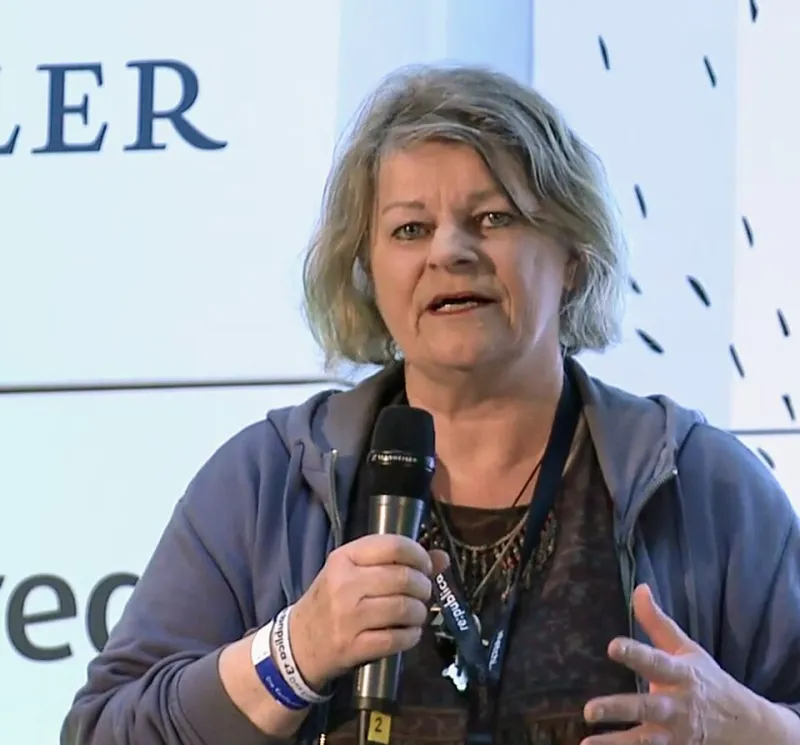
Photo: re:publica, CC BY-SA 3.0 de, via Wikimedia Commons
At a 2026 angel pitch event, the founder who speaks is only part of the presentation. The people seated beside them are a second document—one the room begins reading before the first slide appears. In the US market, where angel groups in Austin, Boston, Chicago, and the Bay Area increasingly run structured pitch nights with fixed attendance lists, the composition of a founder's party is treated as a proxy for judgment. The question is not whether a founder can afford to bring a team. It is whether the team in the room explains the company better than a smaller, sharper group would.
The Entourage Is a Diligence Document
Every additional body in the room changes the read. A five-person delegation from a pre-seed company invites the question of who is minding the store. A two-person party from a company with a dozen employees invites the question of depth. Neither observation is conclusive, and neither is fair. But both are made, often within the first ten minutes, and they shape the tone of the Q&A that follows.
The practical rule is not a headcount. It is defensibility. A founder should be able to explain each attendee's presence in a single clause: this person owns the technical diligence, this person runs the pilot customer relationship, this person built the financial model. If the explanation requires a paragraph, the seat is probably better left empty.
Four Seats Worth Filling
The cofounder who owns the contested domain. If the room is likely to press on architecture, bring the technical cofounder. If the pressure will fall on distribution, bring the commercial cofounder. The mistake is bringing the cofounder who duplicates the CEO's strengths. Two generalists at a pitch table read as one generalist and one absent specialist.
The operator who can speak to the next twelve months. A head of engineering or sales who has actually hired, fired, and shipped carries more credibility than a founder describing plans to hire. Operators should be prepared to answer narrow questions—cycle time, quota attainment, onboarding time—without deferring to the CEO. Deference is polite; it is not persuasive.
The customer, under specific conditions. A customer in the room can be a powerful reference, but only if they can speak fluently to outcomes and are comfortable with a public Q&A. A customer who cannot discuss metrics, or who is visibly uncomfortable, does more damage than a recorded reference call. In 2026, most angel groups will accept a scheduled reference call as a substitute; few will forgive an unprepared customer in the room.
The advisor with a verifiable role. An advisor earns a seat when they have a specific, checkable contribution—a regulatory pathway, a hiring network, a design partner introduction. An advisor whose role is a logo on a website should stay home. Angels have learned to distinguish between a bench and a backdrop.
Three Seats to Leave Empty
The fractional CFO who has not built the model. If the financials will be discussed, the person who built them should attend. A fractional CFO who inherited a spreadsheet and cannot explain the assumptions will be asked to explain them anyway.
The customer who is also a prospective investor. This arrangement confuses the room. Angels want to know whether the customer bought because the product works or because the customer wants equity. Keep the roles separate.
The cofounder in an unresolved equity dispute. Founders sometimes bring a cofounder to demonstrate unity. Angels read body language and answer patterns; a cofounder who hesitates on ownership questions signals a cap table problem before diligence begins.
Speaking Roles, Rehearsed
A pitch event is not a panel discussion, but it benefits from panel discipline. Assign domains in advance: product and technology, go-to-market, financials, and legal or regulatory. One voice per domain. The CEO should answer the first question in each domain and then hand off with a specific sentence: “I will take the traction question, and then [name] will take the retention detail.”
Rehearse the handoff. Angels notice interruption, contradiction, and the founder who answers a question that belongs to someone else. They also notice the opposite—a team member who is present but silent for forty minutes. Silence is not necessarily a flaw, but it should be deliberate. A technical cofounder who speaks twice and answers precisely reads better than one who speaks ten times and repeats the CEO.
Seating, Badges, and the Follow-Up Owner
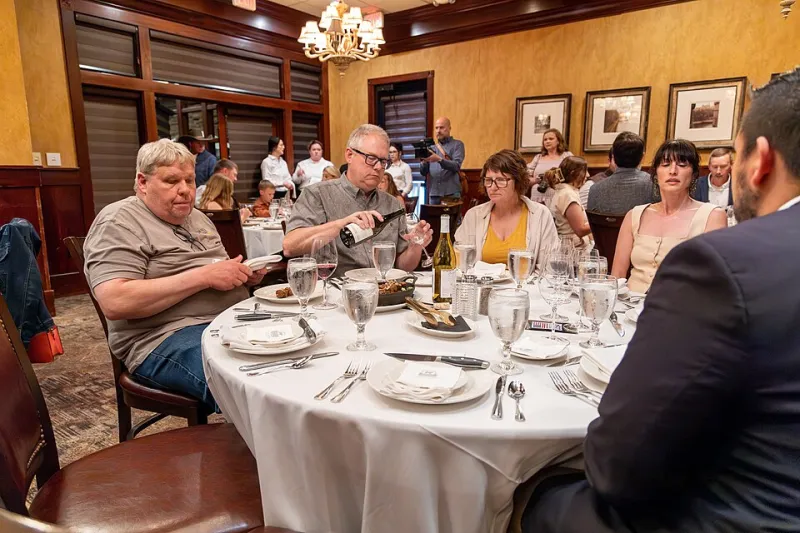
Seat the team as a panel, not a fan club. Spread the group so that each person can see the investors asking questions. Name badges should include role, not just company. Before the event, designate one person to capture investor names, questions, and promised materials. That person owns the forty-eight-hour follow-up. Founders who attend a pitch night without a follow-up owner often leave the room with goodwill and lose it by the weekend.
The One-Sentence Test
Before booking travel or reserving seats, write the sentence: “Each person here is present because ______.” If any blank requires more than a clause, leave that person home. The strongest founder benches in 2026 are not the largest. They are the ones where every seat has a job, every job has a speaker, and every speaker has been rehearsed.