Who Can Actually Write the Wire: Decoding Investor Roles at US Angel Gatherings
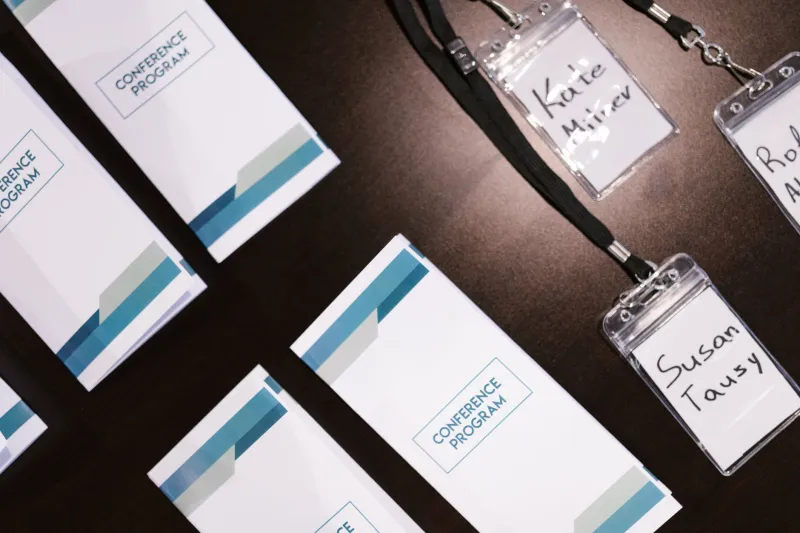
At a 2026 angel showcase in the United States, the most consequential information on an attendee is often printed in type smaller than the company logo. A name tag may read angel investor, scout, venture partner, family-office principal, limited partner, or event sponsor. Those labels are not interchangeable. They describe different levels of decision authority, different time horizons, and different reasons for being in the room. For a founder managing a finite number of follow-up conversations, reading those labels correctly is part of running a disciplined raise.
The Badge Describes a Role, Not a Ready Check
Angel investors generally deploy their own capital. They can sometimes move quickly, but their check size, sector focus, and appetite for leading a round vary widely. A scout often works on behalf of a fund or a group of angels. The scout may have taste, access, and influence, yet usually lacks authority to wire funds. A venture partner may be affiliated with a fund and carry real weight in sourcing or diligence, but the partnership or investment committee still decides. A family-office principal may represent a single family and can be patient and flexible; the principal may also need to consult family members or an investment committee. A limited partner may be an investor in a fund rather than a direct decision-maker for the companies that fund backs. An event sponsor may be a bank, law firm, accounting practice, or fund with a marketing agenda. Sponsorship does not imply a mandate to invest in every company on stage.
None of these roles is inherently more valuable. A scout who understands a fund thesis can be an excellent route to a partner. A family-office principal may be the only person in the room who can write a patient first check. A sponsor may become a useful service provider or a connector. The mistake is to treat the badge as a commitment signal. It is a map of influence and authority, not a promise of capital.
Separate Decision Rights From Influence
Founders should sort contacts by three questions. First, can this person write a check or cause one to be written? Second, can this person influence a decision-maker? Third, can this person refer the company to someone with clearer authority? A venture partner may score high on influence and low on immediate authority. A scout may score high on referral value and low on direct capital. An LP may score low on direct authority for a specific deal but high on long-term relationship value.
This sorting matters because follow-up capacity is limited. In 2026, many founders are balancing pitch events, investor meetups, and diligence requests against a small team. A follow-up note sent to a sponsor who cannot invest is not necessarily wasted, but it should not displace a note to an angel who asked a specific diligence question. The goal is not to rank people by status. It is to allocate scarce attention according to the action each conversation can realistically produce.
Qualifying Questions That Do Not Sound Transactional
The best qualifying questions sound like diligence in reverse: they ask about the investor process, not about the founder need. Instead of asking whether the investor is interested, a founder can ask what the investor current 2026 mandate looks like. Instead of asking for a check, a founder can ask whether the investor typically leads, follows, or co-invests. Instead of asking for a commitment on the event floor, a founder can ask what the next step usually is after an initial conversation.
Useful questions include: What sectors or stages are you spending time on this year? Do you invest directly, or do you mainly refer opportunities to a fund? When you see a company you like, who else is involved in the decision? What is a reasonable timeline from first meeting to a decision? These questions are neutral, specific, and respectful of the investor time. They also give the founder enough information to decide whether a follow-up is worth the slot.
A Three-Question Triage for the Showcase Floor
After a pitch, a founder has a short window to learn what a contact can do. A practical triage uses three questions in sequence. First: What brought you to this event? The answer separates active investors from sponsors, service providers, and curious ecosystem participants. Second: What does your current investment process look like? The answer reveals whether the person invests directly, refers deals, or observes for a fund. Third: What would be the most useful next step for you? The answer may be a deck, a one-page update, an introduction, or a polite no. All four are useful outcomes.
This sequence avoids the awkwardness of asking a stranger for money at a networking reception. It also protects the founder from spending the next week chasing a contact who was never in a position to move the round.
The Follow-Up Slot Is a Budget
Founders often treat follow-up as a matter of politeness. In a busy 2026 calendar, it is better treated as a budget. Each contact should be assigned a next action and a priority. Direct decision-makers and warm referral paths belong at the top. Influence without authority belongs in the middle, with a clear request for an introduction. Sponsors and service providers belong in a separate relationship track unless they have a demonstrated investment mandate.
The follow-up itself should be short and role-aware. A note to a scout might ask whether the company fits the scout fund thesis and whether a partner introduction is appropriate. A note to a family-office principal might offer a concise update and ask about the office process. A note to an LP might thank the person for the conversation and ask whether anyone in the LP network is actively investing at the seed stage. Each message respects what the badge actually represents.
The Room Map After the Event
The most valuable output of an angel event is not a stack of business cards. It is a room map: who can decide, who can influence, who can refer, and who should be kept warm for a later round. Founders who build that map in 2026 will spend less time chasing titles and more time in conversations that can actually move a raise forward. The title on the name tag is not the check. It is a clue about where the check might come from, and what kind of conversation is worth having next.